
















I didn’t always believe in furniture arrangement secrets. I thought interior designers were just born with some mystical gift—the ability to walk into a room, squint dramatically, move one chair two inches to the left, and suddenly the space made sense. Meanwhile, I’d been pushing my couch back and forth for three hours, sweaty, mildly resentful, and still blocking the hallway.
True story: I once arranged my living room so badly that a friend walked in, paused, and said, “Are we… supposed to sit there?”
She pointed at a chair.
A chair facing the wall.
So yeah. I learned. Slowly. Painfully. With a lot of furniture sliders and one near-hernia.
This post isn’t about rules written in stone. It’s about patterns I noticed after screwing it up enough times. The stuff interior designers swear by because it works in real homes—awkward layouts, random windows, weird outlets, and that one corner that refuses to cooperate.
Grab coffee. Or wine. This is gonna wander a little.
First, Let’s Talk About the Biggest Lie We’ve All Believed
That furniture has to be pushed against the walls.
I don’t know who started this rumor. Probably landlords.
I did this for YEARS. Couch against wall. Chairs shoved into corners. Everything clinging to the perimeter like it was afraid of the middle of the room.
Then one day I pulled my couch forward—just a little—and suddenly:
- The room felt bigger (??)
- Conversations made sense
- I stopped feeling like I was waiting for a bus
Interior designers know this: floating furniture creates intention. Walls don’t need babysitters.
1. Start With How You Actually Live (Not How You Wish You Lived)
Design magazines assume:
- You host dinner parties
- You read hardcover books
- You don’t eat on the couch
Be honest.
Do you:
- Watch TV every night?
- Work from your dining table?
- Drop your keys in the same spot like clockwork?
Good furniture arrangement secrets start there.
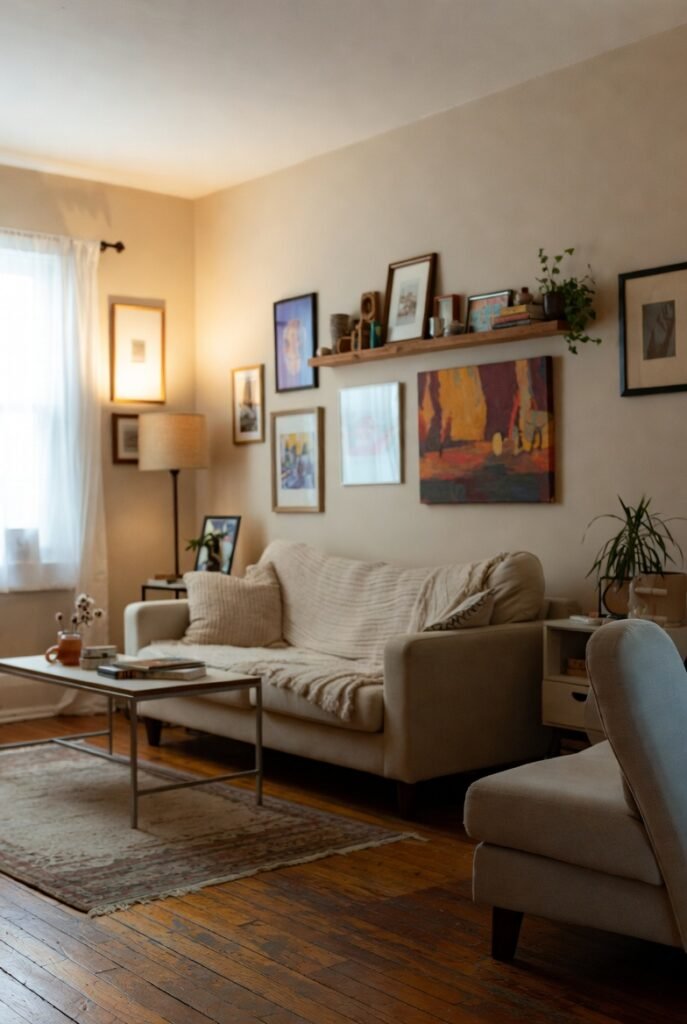
I once arranged my living room to look “elevated.” No TV visible. Chairs angled perfectly. It looked amazing.
I hated it.
Moved everything back two days later.
Design for habits, not aspirations.
2. Rugs Are the Glue (And Most People Get Them Wrong)
If your rug is too small, your furniture will look like it’s drifting apart emotionally.
Interior designers almost always:
- Use a bigger rug than you think
- Anchor at least the front legs of furniture on it
A rug defines a “zone.” Without it, your furniture just exists. With it, the room has structure.
I once layered a rug over another rug because:
- The floor was ugly
- I was impulsive
- It kinda worked??
Sometimes chaos helps.
3. Conversation > Symmetry (Hot Take)
Perfect symmetry looks great in photos.
In real life? It can feel stiff. Like a hotel lobby where no one knows where to sit.
Designers aim for balance, not matching.
That means:
- Two chairs that aren’t identical
- A sofa balanced by a chair + ottoman
- Visual weight spread out, not mirrored
I stopped trying to make everything match and my space immediately felt more relaxed. Less “showroom,” more “come sit, we’ll complain about work.”
4. Walkways Matter More Than You Think
If you have to:
- Sidestep
- Turn sideways
- Or whisper “sorry” to your own furniture
…something’s off.
Interior designers plan clear paths through rooms. Not huge highways. Just enough space so you’re not bumping into corners like a Roomba.
Rule of thumb:
- About 30–36 inches for main walkways
- Enough room to pull out chairs without gymnastics
Your shins will thank you.
5. Coffee Tables Should Be Boring (I Said What I Said)
I love a statement piece. But coffee tables? They need to behave.
Designers usually pick coffee tables that:
- Sit 14–18 inches from the sofa
- Are easy to walk around
- Don’t stab you when you get up too fast
I once bought a sculptural coffee table that looked like art and felt like a personal attack. Shins destroyed. Lesson learned.
6. Don’t Center Everything (Unless It Makes Sense)
Centering furniture on walls feels logical. But rooms aren’t always logical.
That window slightly off-center?
The fireplace that’s kinda… there?
Interior designers often center furniture on a focal point, not the room itself.
Focal points can be:
- Fireplace
- TV
- Big window
- Art piece you love too much
Once I stopped forcing symmetry and worked with the weirdness, my space stopped fighting me.
7. Scale Is Everything (And Tricky)
This one took me a while.
A tiny chair next to a massive couch? Awkward.
A huge sectional in a small room? Overwhelming.
Interior designers mix sizes, but they keep proportions in check.
Quick gut check:
- Does one piece dominate the room?
- Does everything feel shrunk?
- Do you keep bumping into corners?
If yes, something’s off.
I downsized my coffee table once and suddenly the room felt calmer. I didn’t even realize it was the problem. Sneaky little table.
8. Angles Are Your Friend (Sometimes)
Not everything has to sit parallel to walls.
Designers use angles to:
- Break up boxy rooms
- Create flow
- Make layouts feel intentional
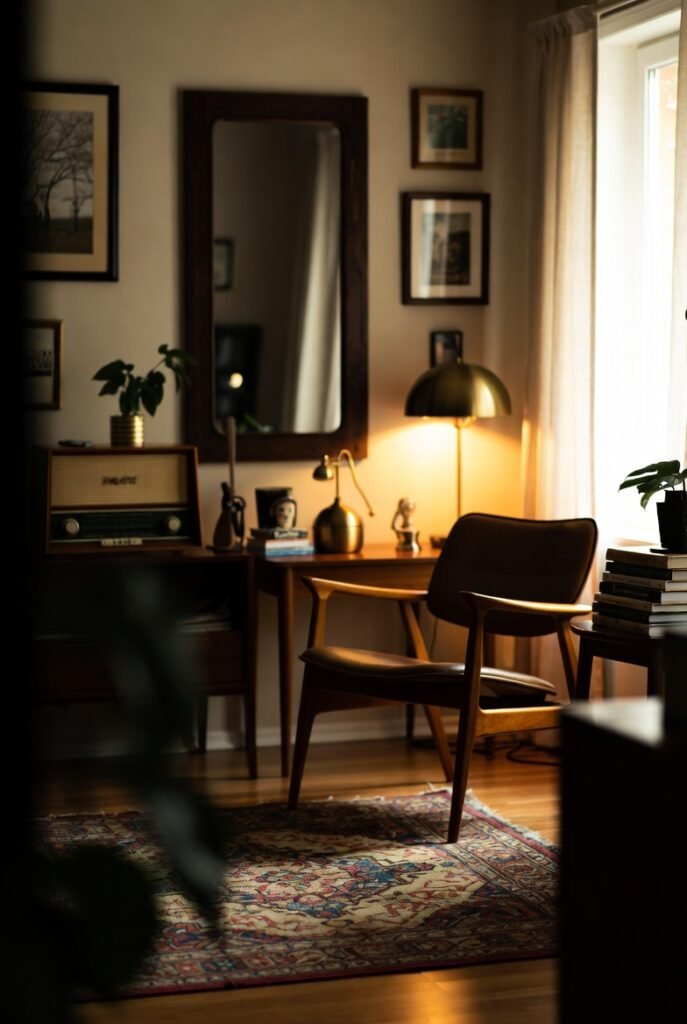
A chair angled slightly toward the sofa can make conversations feel natural. Just don’t overdo it unless you want your room to feel like a maze.
9. Lighting Placement Changes Everything
Furniture arrangement secrets aren’t just about furniture.
Designers think in layers:
- Overhead (fine, I guess)
- Task lighting near seating
- Ambient lighting to soften edges
Placing a lamp next to a chair makes it feel usable. Suddenly that corner isn’t dead space—it’s a reading nook. Or a doom-scrolling nook. No judgment.
10. The “Take Everything Out” Trick (Painful but Effective)
Interior designers do this. I resisted it forever.
Clear the room. Or at least most of it. Then add pieces back one by one.
It’s annoying. It takes time. You’ll question your life choices.
But it works.
I did this once and realized:
- One chair didn’t belong
- One table was unnecessary
- The room didn’t need as much as I thought
Sometimes the best arrangement secret is less stuff.
Random Little Things Designers Always Notice
- Side tables within arm’s reach (no lunging)
- Seating that faces each other, not just the TV
- Visual height balance (tall lamp on one side, art on the other)
- Furniture that doesn’t block natural light
Tiny adjustments. Big payoff.
Places Images or GIFs Would Hit Perfectly
- A funny GIF of someone repeatedly moving a couch
- Before/after furniture layouts
- A cozy “final” room shot that feels lived-in, not staged
Outbound Links (Worth a Scroll)
- Apartment Therapy (layout gold): https://www.apartmenttherapy.com
- Emily Henderson’s blog (real talk + design): https://stylebyemilyhenderson.com
One Last Thought (Not a Conclusion, Relax)
Good furniture arrangement isn’t about rules—it’s about comfort, flow, and honesty.
If you like how your room feels, you did it right.
Even if the chair faces the wall.
(Okay maybe not that.)
Move things. Sit. Adjust. Repeat.
That’s the secret they don’t always tell you.