


















Basement interior design that’ll make you want to move downstairs used to sound like a lie someone told on HGTV at 2 a.m. You know the vibe. Host smiling. Everything bright. Basement magically not damp, dark, or haunted by old treadmills and Christmas decorations from 2009.
Meanwhile, my basement growing up? Concrete floors. One flickering bulb. A couch that definitely came from the curb. It smelled like dust and regret. If someone said, “Let’s hang out in the basement,” you’d mentally prepare yourself. Emotionally. Spiritually.
Back in 8th grade, I wore two different shoes to school. Not on purpose. It was a Monday.
That same chaotic energy followed me into adulthood… and into my first real basement project.
But here’s the thing. Basements don’t have to be sad. They don’t have to feel like the “extra” room. With the right moves, basement interior design can turn that forgotten square footage into the coziest, most wanted spot in the house. The kind of place you sneak off to with a blanket and snacks and tell everyone upstairs, “I’ll be back in a minute” (you won’t).
So yeah. Let’s talk basements. The glow-up kind.
First, Let’s Acknowledge Basement Trauma
Before we get into actual basement interior design that’ll make you want to move downstairs, we need to acknowledge the emotional baggage.
Basements have a reputation.
They’re cold. Dark. Echo-y. Smell faintly like old paint cans and unresolved family history. And because of that, a lot of people don’t even try with them. They just accept it as storage + laundry + spider habitat.
I did that for years.
Then one winter, I realized I was avoiding my own house because the upstairs felt cramped and loud and chaotic. Meanwhile, the basement sat there… unused… waiting… judging me.
That’s when it clicked. This wasn’t a basement problem. It was a design problem.
Rule #1: Stop Treating the Basement Like It’s Temporary
This is the biggest mindset shift.
Most people design basements like, “Eh, good enough.” Cheap carpet. Random furniture. Lighting as an afterthought.
But if you want basement interior design that’ll make you want to move downstairs, you have to commit. Emotionally. Financially (a little). Spiritually (yes).
Design it like it’s a destination. Not a backup plan.
Lighting Will Either Save You or Ruin You
Let’s be dramatic for a second. Lighting is everything in a basement.
Overhead-only lighting? Criminal. One sad bulb in the middle of the ceiling? Absolutely not.
What actually works:
- Recessed lighting (warm, not hospital-bright)
- Floor lamps tucked into corners
- Table lamps for “I live here now” energy
- LED strips behind shelves or under stairs (trust me)
I added lamps to my basement before I changed anything else, and suddenly it didn’t feel underground. It felt… intentional.

Low Ceilings? Lean Into It
If your basement ceiling is low (hi, same), fighting it is exhausting.
Instead of pretending it’s not low:
- Paint the ceiling a soft dark color
- Expose beams if possible
- Keep furniture low-profile
Low ceilings + cozy design = intentional snug, not “unfinished dungeon.”
There’s something about a slightly compressed space that feels comforting when done right. Like a good hoodie.
The Floor Matters More Than You Think
Cold floors will undo all your hard work.
Basement interior design that’ll make you want to move downstairs needs warmth underfoot. Always.
Options that actually work:
- Area rugs (layer them!)
- Luxury vinyl plank (looks like wood, feels warmer)
- Carpet tiles if you’re nervous about spills or moisture
I once tried to live with bare concrete. I lasted two weeks. My feet staged a protest.
Choose One Main Purpose (Then Let It Be Flexible)
This is where people mess up.
They try to make the basement:
- A gym
- A movie theater
- A guest room
- A playroom
- A storage unit
All at once.
No.
Pick one main vibe:
- Cozy hangout
- Media room
- Quiet escape
- Guest suite
Then let everything else be secondary.
My basement’s main identity? Cozy cave. Everything else fits around that.
Furniture: Soft, Inviting, Slightly Oversized
Basement furniture should make you want to sink in and stay.
Hard lines? Sharp edges? Nope.
Think:
- Deep couches
- Oversized ottomans
- Poufs you can move around
- Throw blankets you actually use
I bought a couch once that looked amazing and felt like sitting on a waiting room chair. It did not survive.
Basements Love Texture (More Than Upstairs Rooms)
Concrete walls, drywall, low ceilings—it can all feel flat fast.
So pile on the texture:
- Rugs (yes, plural)
- Knits
- Wood accents
- Woven baskets
- Soft curtains even if the windows are tiny
Texture tricks the brain into feeling warmth. It’s one of those basement interior design secrets no one talks about enough.
Color Choices That Actually Work Underground
White can work in basements… but it’s risky. It can turn cold fast.
Better bets:
- Warm neutrals
- Greige (I know, I know—but it works)
- Soft clay tones
- Muted greens
- Deep blues for accent walls
I painted one basement wall a deep green on a whim and suddenly the whole space felt expensive. For no reason. Science? Magic? Unsure.
Storage, But Make It Invisible
Basements still need storage. That’s reality.
But basement interior design that’ll make you want to move downstairs hides it well.
Closed cabinets. Built-ins. Benches with storage inside. Furniture that multitasks.
Out of sight = peace of mind.
Sound Matters (More Than You Think)
Basements echo. Like… a lot.
Soft surfaces help:
- Rugs
- Curtains
- Upholstered furniture
- Fabric wall art
Once I added a big rug and curtains, the room stopped sounding like a parking garage and started sounding like a place where secrets could be told.
Add One “Why Is This Down Here?” Moment
This is my favorite trick.
Add something slightly unexpected:
- A bar cart
- A record player
- A reading nook
- A neon sign (tastefully, please)
- A gallery wall
Something that makes people go,
“Oh. This is nice.”
That moment changes how the space is perceived instantly.
Basements Are Perfect for Moody Vibes (Embrace It)
Upstairs rooms often fight for light and airiness. Basements don’t have to.
They can be:
- Moody
- Cozy
- Cinematic
- Slightly dramatic
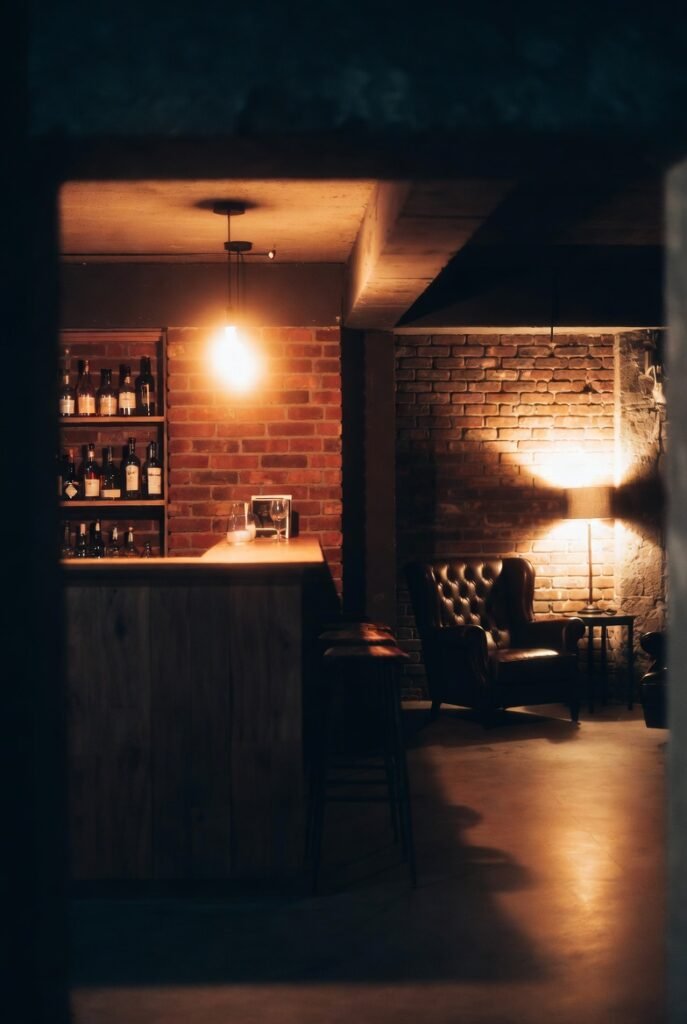
I leaned into darker tones and softer lighting and suddenly my basement became everyone’s favorite room. Including mine.
Things I Overthought (So You Don’t Have To)
Quick hits:
- Matching everything perfectly (no one cares)
- Making it look like upstairs (it’s a different space)
- Waiting until it’s “finished” to enjoy it
- Being afraid of darker colors
Basements reward bravery.
Why Basements End Up Being the Best Rooms
Here’s the weird part.
Once a basement is done right, it often becomes the best room in the house. Quieter. Cozier. Less pressure to be perfect.
It’s where:
- Conversations last longer
- Movies actually get watched
- You decompress without realizing it
That’s the magic of thoughtful basement interior design that’ll make you want to move downstairs. It doesn’t shout.