


















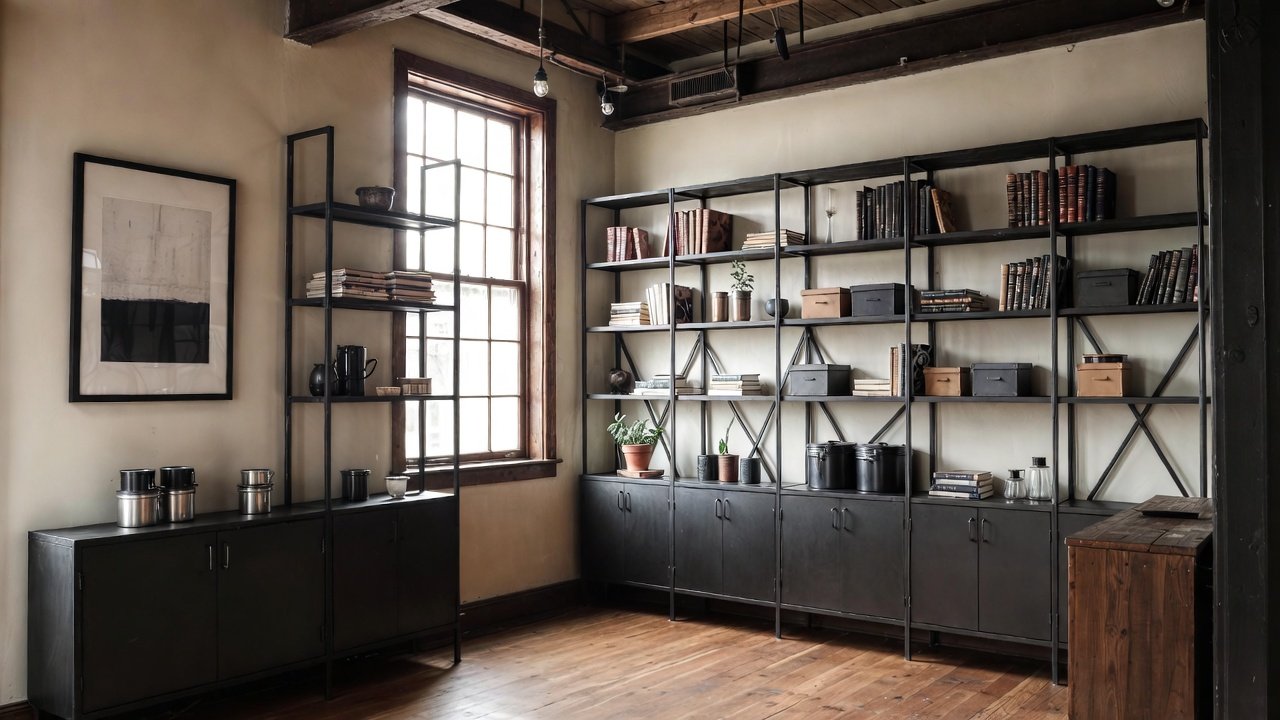
I didn’t choose industrial interior design.
Industrial interior design kinda… chose me.
It started when I moved into an apartment that had exposed brick and pipes that looked like they belonged in a submarine. I remember standing there with my keys, staring at the ceiling, thinking, Is this cool… or unfinished?
Like—should I call maintenance? Or a photographer?
That’s when I started Googling industrial interior design done right while sitting on the floor eating pizza out of the box. (No furniture yet. Just vibes and cardboard.)
And wow. The internet had opinions.
Apparently, industrial style is edgy. Masculine. Moody. Raw.
Also apparently, if you mess it up, your place looks like an abandoned factory where ghosts definitely whisper at night.
No pressure.
So yeah, I experimented. I screwed it up. I leaned too hard into metal at one point (my shins still haven’t forgiven me). But eventually, I figured out how to make industrial design feel real—not cold, not try-hard, not like a set from a gritty crime show.
Let me tell you what actually works.

Industrial Design Isn’t About Looking Tough (Even Though It Pretends To Be)
Here’s the biggest lie about industrial interiors:
It’s not about being hard, cold, or emotionless.
It’s about honesty.
Brick that looks like brick.
Metal that looks like metal.
Wood that still shows its scars.
No fake distressing. No “factory chic” wallpaper pretending to be concrete. That stuff always cracks me up. Like wearing jeans with holes already ripped in them but paying extra for it. (I’ve done it. Still judging myself.)
Real industrial interior design done right embraces materials that already have stories. Dents. Scratches. History.
And yeah, that can feel intimidating at first. Especially if you’re used to clean, polished spaces.
My First Industrial Mistake (and It Was a Doozy)
I went all-in way too fast.
Black metal coffee table.
Steel bar stools.
Concrete-look everything.
It felt… aggressive.
My friend came over, sat down, and said,
“Are we allowed to relax here?”
That one hurt. Because she was right.
Industrial design without warmth feels like a waiting room for a villain monologue.
Lesson learned.
The Secret Sauce: Warmth (Yes, Even in Industrial Spaces)
If you want industrial interior design done right, you have to balance the hard stuff with soft stuff.
Hard:
- Brick
- Steel
- Concrete
- Iron
Soft:
- Leather
- Linen
- Wool
- Wood (real wood, not shiny laminate)
Once I added a worn leather couch and a chunky throw blanket, everything shifted. The room still felt raw—but now it felt human.
Like someone actually lived there.
Like someone maybe stayed up too late watching Netflix and forgot to fold laundry. (Guilty.)

Exposed Everything (But Make It Intentional)
Exposed brick? Love it.
Exposed pipes? Cool.
Exposed wiring everywhere like spaghetti? Eh… maybe calm down.
Industrial design isn’t about showing everything. It’s about showing the right things.
I left the brick wall alone. Didn’t paint it. Didn’t “clean it up.” Just let it be imperfect.
But I did hide the random cords because there’s a difference between raw and chaotic. (I learned that after nearly tripping and taking out a lamp.)
Industrial done right feels edited—even if it doesn’t look polished.
Furniture That Looks Like It Has a Past
Here’s my rule:
If it looks brand new and shiny, it probably doesn’t belong.
Industrial furniture should feel like:
- It’s been somewhere
- It’s seen some things
- It might judge you silently
Metal legs with scratches? Yes.
Wood tables with uneven grain? Absolutely.
A chair that looks like it came from a factory break room in 1973? Weirdly perfect.
I once bought a table that was too perfect. It looked fake next to the brick wall. Like it was embarrassed to be there.
Returned it. No regrets.
Color Palette: Less Is More (But Don’t Go Boring)
Industrial interior design lives in neutrals—but the interesting kind.
Think:
- Charcoal
- Warm gray
- Rust
- Cognac
- Blackened steel
- Deep browns
Not:
- Stark white everywhere
- Cool blue-gray that feels icy
- Anything glossy
I added small hits of color through art and books. Nothing loud. Just enough to keep the space from feeling like a black-and-white movie.
Lighting Is Where Industrial Design Lives or Dies
Overhead lighting alone will ruin everything. Ask me how I know.
Actually, don’t. It’s embarrassing.
Industrial spaces need layered lighting:
- Pendant lights with warm bulbs
- Floor lamps with metal shades
- Table lamps that soften corners
Edison bulbs? Sure. But sparingly. Too many and it starts to feel like a theme restaurant.
Warm light changes everything. It turns concrete from “cold slab” into “moody and cool.”
Art That Doesn’t Try Too Hard
Industrial walls love big art.
One oversized piece > ten tiny ones.
I went with photography and abstract stuff. Nothing precious. Nothing overly sentimental. Just things that felt strong enough to stand up to the brick.
Pro tip: Don’t overthink matching. Industrial spaces don’t care about coordination. They care about presence.
Industrial Design Is Messy (And That’s Kinda the Point)
Here’s the thing no one tells you:
Industrial interior design done right actually looks better when it’s a little messy.
A book left open.
A throw tossed casually.
A mug on the table.
Too tidy, and it feels staged.
Too perfect, and it loses its soul.
Industrial style thrives on lived-in chaos. The good kind.
Final Ramble (Because Wrapping Up Feels Too Formal)
I didn’t set out to love industrial interior design. I just wanted my place to feel honest. Not precious. Not fragile.
And that’s what industrial style does best—it lets your home breathe. Scratch. Age. Exist.
If you’re thinking about trying it, don’t aim for perfect. Aim for real.
That’s industrial interior design done right.
And yeah, sometimes I still bump into the metal table.
Worth it.
🌐 Outbound Link Suggestions
- Apartment Therapy — real-life industrial spaces that don’t feel scary
- Dezeen — for architectural inspiration and raw interiors