


















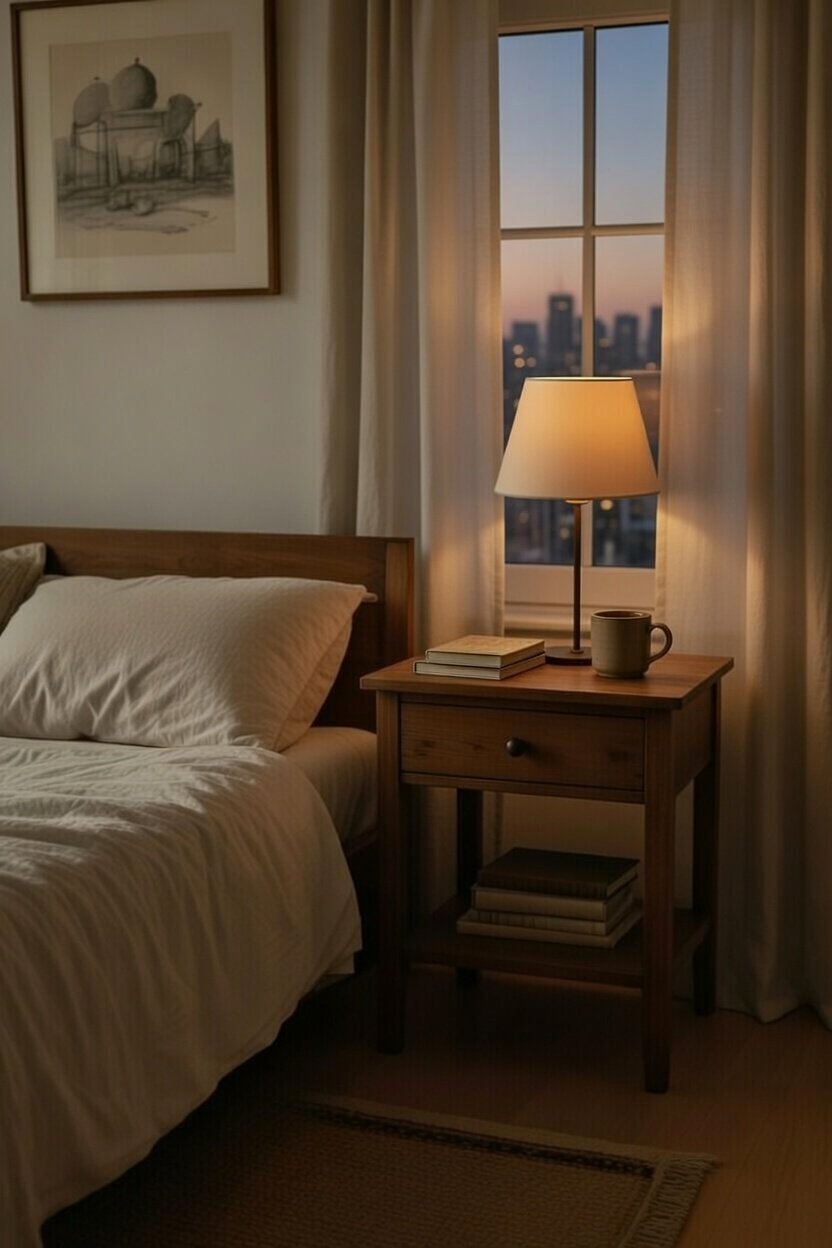
Bedroom interior design……Laundry chair? Present.
Random cables I “might need someday”? Oh yeah.
Lighting that felt like an interrogation room? Absolutely.
Back in 8th grade, I wore two different shoes to school. Not on purpose. It was a Monday.
That same chaotic energy followed me into adulthood and straight into my bedroom interior design decisions.
But somewhere between living in Queens, not sleeping well, and realizing my phone knew me better than my own mattress did, I started caring. Like… really caring. About rest and calm. About making my bedroom feel like a place I actually wanted to be instead of a crash pad between days.
That’s when I accidentally stumbled into what I now call bedroom interior design secrets for the most relaxing space ever. Not fancy secrets. Not rich-people secrets. Just real-life, trial-and-error, “why didn’t anyone tell me this sooner” stuff.
So grab coffee. Or tea. Or lie down (honestly, that tracks). Let me tell you what actually works.
The first thing I learned—way later than I should have—is that bedrooms are emotional.
You can’t brute-force calm.
You can buy all the nice things, but if your room still feels chaotic, your brain stays on high alert. And if your brain is stressed, sleep is like, “Yeah no, I’m gonna scroll instead.”
So the goal of good bedroom interior design isn’t “pretty.”
It’s permission to relax.
That’s it. That’s the mission.
First: Your Bed Is the Main Character (Act Accordingly)
I used to treat my bed like a background extra.
Cheap frame. Random mattress. Sheets from a set that slowly disappeared one by one like socks in the dryer.
Huge mistake.
Your bed should feel like:
- A reward
- A safe landing
- A place where stress goes to die
A few things that changed everything for me:
- A headboard (even a simple one—psychological game changer)
- Layers: fitted sheet, flat sheet, duvet, throw (yes, even if you kick it off)
- Pillows that aren’t just decorative liars
If your bed doesn’t make you sigh when you sit down, something’s off.
Lighting: Why Is Everyone So Mean to Their Bedrooms?
Why. WHY. is there always one blinding overhead light?
Bedroom interior design secret #1:
Overhead lighting should be optional, not mandatory.
I switched to:
- Bedside lamps
- One soft floor lamp in the corner
- Warm bulbs (nothing above 2700K, I beg)
Suddenly my room stopped yelling at me.
Soft light tells your nervous system, “Hey. We’re safe. You can chill.”
Harsh light says, “TIME TO SOLVE PROBLEMS.”
No thanks.
Color Is a Mood, Not a Trend
I once painted a bedroom wall a bold, dramatic color because Pinterest told me to be brave.
The most relaxing bedrooms I’ve seen—and lived in—stick to:
- Muted tones
- Soft neutrals
- Colors that feel like exhaling
That doesn’t mean boring. It means intentional.
In my Queens apartment, I landed on a warm off-white with a tiny hint of beige. Sounds dull. Feels like peace.
If you love color? Bring it in through:
- Bedding
- Art
- Rugs
Commit less. Sleep more.
Texture Does the Heavy Lifting (Quietly)
Flat rooms feel cold.
Relaxing rooms feel layered.
This is where bedroom interior design gets sneaky good.

Think:
- Linen sheets
- A chunky knit throw
- A rug that’s actually soft under bare feet
- Curtains that move when the window’s open
Texture makes a room feel alive without being loud.
It’s like adding background music to a movie scene. You don’t notice it—but you’d miss it if it was gone.
Your Bedroom Is Not a Storage Unit (I’m So Sorry)
This one hurt me.
Because I love stuff. And I live in Queens. And closets are… optimistic.
But clutter is the enemy of relaxation. Even if you “don’t notice it.”
Your brain notices.
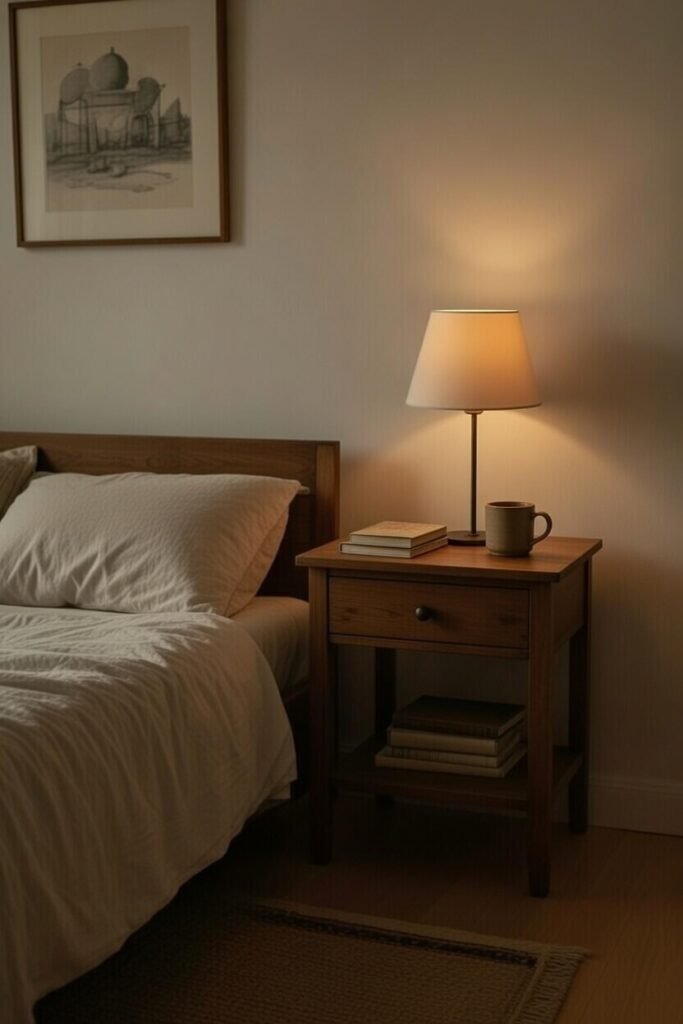
I didn’t believe this until I cleared off my nightstand and suddenly stopped waking up annoyed for no reason.
A few things that helped:
- Closed storage (drawers > open shelves)
- One nightstand surface rule: lamp + book + water. That’s it.
- Under-bed storage with actual containers, not chaos piles
Calm rooms aren’t empty. They’re edited.
The Phone Problem (Yes, We Have to Talk About It)
I hate this part too.
Bedrooms weren’t meant to glow.
But here we are, charging our phones like they’re IV drips.
My compromise:
- Phone charges across the room
- Actual alarm clock (retro, I know)
- Book on the nightstand instead of doomscroll bait
Bedroom interior design secret nobody tells you:
Where you put your phone changes how your room feels.
If your bed faces a glowing rectangle every night, your brain never fully clocks out.
Art That Doesn’t Demand Attention
This was a weird one for me.
I love bold art. Loud art. Art that’s like, “LOOK AT ME.”
But in the bedroom? Not so much.
The most relaxing spaces use art that:
- Feels personal
- Feels soft
- Doesn’t shout
Photography. Abstracts. Line drawings. Something that feels like a whisper, not a TED Talk.
Curtains: The Unsung Heroes of Sleep
If you’re still using flimsy curtains or none at all… we need to talk.
Good curtains:
- Block light
- Add softness
- Make the room feel finished
Mount them higher than the window. Wider than you think.
Instant calm. Instant hotel energy.
Scent Is Memory, Whether You Like It or Not
Smell goes straight to the brain.
So yes—scent is part of bedroom interior design. Fight me.
A few options:
- Linen spray
- A candle you only light at night
- Essential oils (used gently, not like you’re fumigating)
Pick one signature scent. Let your brain associate it with rest.
When I smell mine now, my shoulders drop automatically. Wild.
Sound Matters More Than You Think
Queens is not silent. Ever.
So instead of fighting noise, I embraced it.
- White noise machine
- Fan (even in winter—don’t ask)
- Soft playlist I only use for sleep
Bedroom interior design isn’t just visual. It’s sensory.
Design for real life, not a silent retreat brochure.
Personal But Peaceful
Your bedroom should feel like you—just the calm version.
Photos are okay.
Mementos are okay.
That weird thing you love is okay.
Just… curate it.
If something brings up stress, memories you’re not ready for, or guilt (“I should really deal with this”)—it doesn’t belong by your bed.
Protect your sleep like it’s fragile. Because it is.
The Biggest Secret of All
Ready?
The most relaxing bedroom interior design secret is permission.
Permission to:
- Not optimize
- Not impress
- Not turn your bedroom into a multipurpose command center
Your bedroom doesn’t need to do everything.
It just needs to help you rest.
And when you finally get that right—when you walk in, turn on a lamp, and feel your whole body exhale—that’s when you know you nailed it.
Even if your shoes still don’t match.
A Couple Places I’ve Loved for Bedroom Inspiration
- Apartment Therapy – real bedrooms, real people, real mess
- Cup of Jo – cozy, emotional, very human spaces